3D Pyramind: A Thoughtful Embroidery Design Review
First Impressions: Clean Geometry with Quiet Confidence
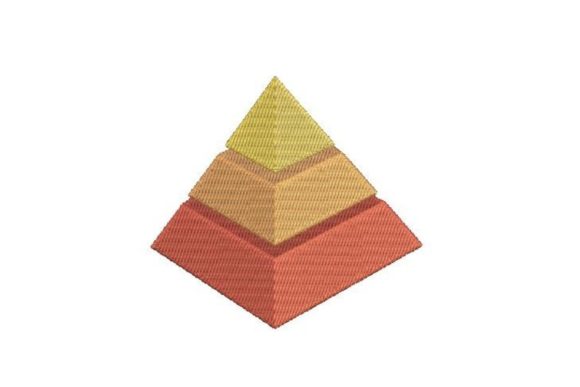
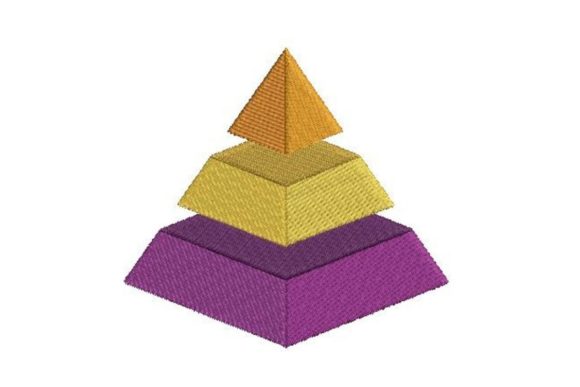
When I opened the 3D Pyramind embroidery file, what struck me wasn’t flashiness—it was balance. The shape is unmistakably geometric, yet it avoids feeling cold or clinical. There’s a subtle taper in the lines, a gentle lift in the apex, and just enough layered shading to suggest depth without overcomplicating the stitch map. It reads as “classic” at first glance—think mid-century modern meets mindful minimalism—but the execution leans into intentionality, not nostalgia. This isn’t a clip-art pyramid slapped onto fabric; it’s a considered machine embroidery design that invites attention without demanding it.
Real-World Use: That Tote Bag Moment
Last week, I prepped a custom embroidered tote for a local boutique—cotton canvas, medium weight, natural unbleached tone. I’d originally planned a botanical motif, but swapped in 3D Pyramind on instinct. Why? Because its clean silhouette held up beautifully against the fabric’s subtle texture, and its centered symmetry gave structure to the bag’s wide front panel. Customers noticed it—not as a gimmick, but as a quiet signature. One asked, “Is that hand-drawn?” (It wasn’t—but the design’s clarity made it feel human-scaled.) That’s the sweet spot: when a digital embroidery file supports your brand voice instead of overriding it.
Where It Shines—and Where to Pause
3D Pyramind performs exceptionally well on stable, medium-to-heavy fabrics: sweatshirt fleece, twill aprons, linen pillow covers, and structured tea towels. Its moderate stitch density allows breathability while maintaining crisp edges—no bleeding or puffing on well-stabilized cotton or poly-cotton blends. As a tote bag design or sweatshirt embroidery, it anchors the composition without overwhelming.
That said, I’d approach it thoughtfully on stretchy knits (like baby onesies or lightweight tees), where even slight distortion can blur the pyramid’s clean angles. On dark fabric, test thread colors carefully—the design relies on tonal layering, so low-contrast threads (e.g., charcoal gray on black) may flatten its 3D effect. And on curved surfaces—caps or rounded pillow corners—verify hoop placement early; the base width matters more than you’d think for alignment.
Small Hoop Considerations
If you’re working with a 4×4 hoop, check the design’s footprint before stitching. While 3D Pyramind isn’t sprawling, its dimensional cues depend on proportional spacing. Crowding it near seam allowances or zippers risks visual compression. For embroidered patch applications, confirm whether the file includes an outline or tack-down layer—those details affect clean peel-and-stick results.
Impact Beyond Stitching: Value, Trust, and Presentation
This is where 3D Pyramind quietly elevates your work. On personalized gifts—say, a nursery pillow or holiday ornament—it reads as intentional, not generic. That perception builds trust: customers associate clean geometry with care and craftsmanship. For Etsy sellers or small shop products, it’s versatile branding fodder: pair it with neutral thread palettes for timeless appeal, or use bold contrast (navy thread on cream linen) to signal modern confidence.
It also works hard in digital contexts. In printable mockups, the shape scales cleanly across product views—from flat lay to 3/4 angle—making it reliable for listings, social previews, or wholesale lookbooks. Unlike overly busy motifs, 3D Pyramind doesn’t compete with typography or photography; it complements.
Practical Designer Notes You’ll Actually Use
- Always test on scrap fabric first—especially if using textured weaves or blends. What looks sharp on screen may soften slightly in satin or fill stitch on burlap or terry cloth.
- Review stitch density before scaling. Enlarging beyond recommended proportions can expose thin areas or cause thread nesting in tight corners.
- Confirm stabilizer match: medium-weight cutaway for knits, tear-away for stable wovens, and fusible + tear-away for lightweight linens used in baby embroidery.
- Check thread color contrast across light and dark backgrounds—not just for visibility, but for emotional tone. Warm beige thread on oatmeal fabric feels earthy; cool silver-gray on navy reads sleek and contemporary.
- Test black-and-white mockups. If the design holds its identity without color, it’s likely strong enough for monochrome branding or limited-palette collections.
- Verify licensing before selling finished items or bundling the file into design assets. Since 3D Pyramind falls under Intricate Cuts, review terms for commercial embroidery use—especially if offering it as part of a craft business kit or digital embroidery bundle.
A Design That Supports Your Intent—Not Your Ego
I don’t reach for 3D Pyramind when I want “wow.” I reach for it when I want resonance. It fits seamlessly into a curated collection of handmade products—not as the star, but as the steady anchor. Whether stitched on a chef’s apron, a minimalist baby blanket, or a boutique gift tag, it carries weight without heaviness. For craft entrepreneurs, that reliability is gold: fewer revisions, stronger repeat appeal, and designs that age well instead of dating quickly.
It’s also refreshingly honest about its scope. This isn’t an applique design begging for embellishment—it’s confident in its own line work and layering. That restraint makes it easier to pair with other elements (a single-line monogram, a tiny running stitch border) without visual competition. In short: 3D Pyramind is the kind of embroidery file that helps you say more by doing less.
Final Thought: Design as Quiet Collaboration
Every time I use 3D Pyramind, I’m reminded that great embroidery design doesn’t shout—it listens. It listens to the fabric’s drape, the wearer’s movement, the buyer’s eye, and the maker’s intention. It doesn’t force a mood; it invites one. Whether you’re stitching a one-of-a-kind personalized gift or building a scalable line of custom apparel, this pyramid doesn’t distract from your story—it gives it clean, grounded shape. And in a market flooded with noise, that kind of thoughtful clarity? That’s not just functional. It’s rare.